)
)
)
Place is the space: why the real world is still the main event
Customers are everywhere, seeing no boundary between the digital and real world when it comes to being engaged. So what are brands doing to meet them in the places where they lurk? In this two-part series, we look at what this digital-real world chimera looks like from all sides and outline what some of the leaders in the field are doing.
Part 1 – How real world ‘place’ still holds great appeal to all customers and is a key driver of digital engagement
Part 2 – How the digital ‘place’ is more than just a website and an app and is increasingly relying on real world presence to drive engagement
PART 1: Why the real world is still the main event
TL;DR
-
Ecommerce has not made physical place irrelevant, rather it has changed what physical place is for – less a compulsory point of purchase, more a destination for discovery, reassurance, participation and memory.
-
The neat division between online and offline has broken down. Social content now sends people into shops, cafés and venues, while physical experiences generate the content that sends the next wave of customers there.
-
In a crowded real world, simply being present is not enough – brands need to create a reason to stop, join in, share or return.
-
HelloFresh at the Natural History Museum, Netflix House, Capital One Cafés and Albertsons’ Rico’s Tacos all show brands occupying places beyond their traditional sector.
-
The opportunity is not “experiential marketing” for its own sake, it is to become useful, entertaining or socially relevant in the context the customer is already living through.
Video killed the radio star, but did ecommerce kill place? No, it did not. It killed the assumption that a customer had to visit a particular place to buy a particular thing. The real world is alive and well – and it is where brands need to be to engage with customers, even the online ones.
Customers never have to leave the house; they can now order dinner, compare insurance and buy a new pair of shoes without touching either the shoes or a shop. Yet they continue to go to high streets, supermarkets, cafés, museums, hotels, stadiums and shopping centres. Life is still stubbornly physical, but with a digital underpinning..
The question for any brand, retailer or customer-facing organisation is no longer simply where it sells, but where it can earn a meaningful role in those purchase moments wherever they take place..
The ‘Viral Pilgrimage’: how the physical world changed roles
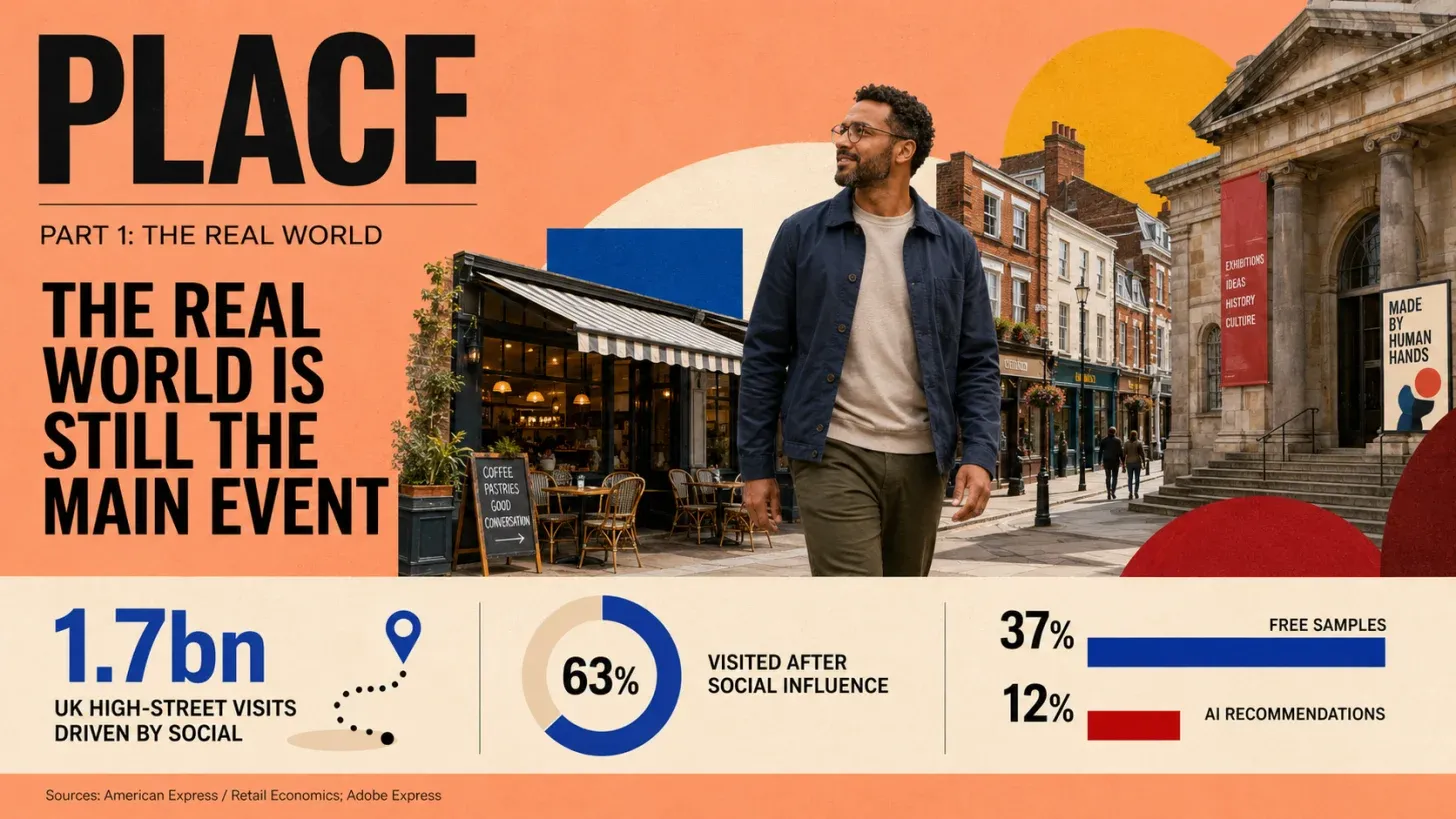
Adobe Express research among 2,000 British consumers earlier this year captures this clearly. Some 29% say they are buying more online and the same proportion are buying more through social platforms. Almost a quarter, 23%, are visiting independent stores less often. Yet physical influence remains strikingly potent: 37% say free samples would be the most effective way for brands to influence what they buy, while only 12% trust AI-based product recommendations.
This is not a simple online-up, offline-down story, it suggests that different places now perform different jobs. Digital is often excellent at speed, range and comparison. Physical place is good at proof. It lets a customer taste, touch, test, ask, watch and judge. It can turn an abstract claim into evidence.
The distinction becomes even less tidy when social media enters the picture. Recent research from American Express and Retail Economics estimates that social content is responsible for 1.7 billion visits to UK high streets each year. Nearly two-thirds of adults surveyed had visited a shop or hospitality venue after seeing it on social media; among Gen Z, the figure rose to 88%.
The most revealing number is not the initial visit, but what follows. Eighty-two per cent returned to a business after a socially influenced first trip, 79% recommended, reviewed or posted about their most recent visit and 32% visited other nearby businesses during the same outing. More than a third of Gen Z had even travelled to another town or region to obtain something they first saw trending online.
This is the “viral pilgrimage” economy: the scroll creates the journey, the journey creates the experience and the experience supplies the next scroll. Digital does not replace place, it adds momentum.
This also means physical place now has to work harder. A shop is no longer competing only with the shop next door, but with every other possible use of the customer’s time and money – and with the more convenient option of staying at home. Availability is not enough, place has to provide a reason.
Borrowing someone else’s place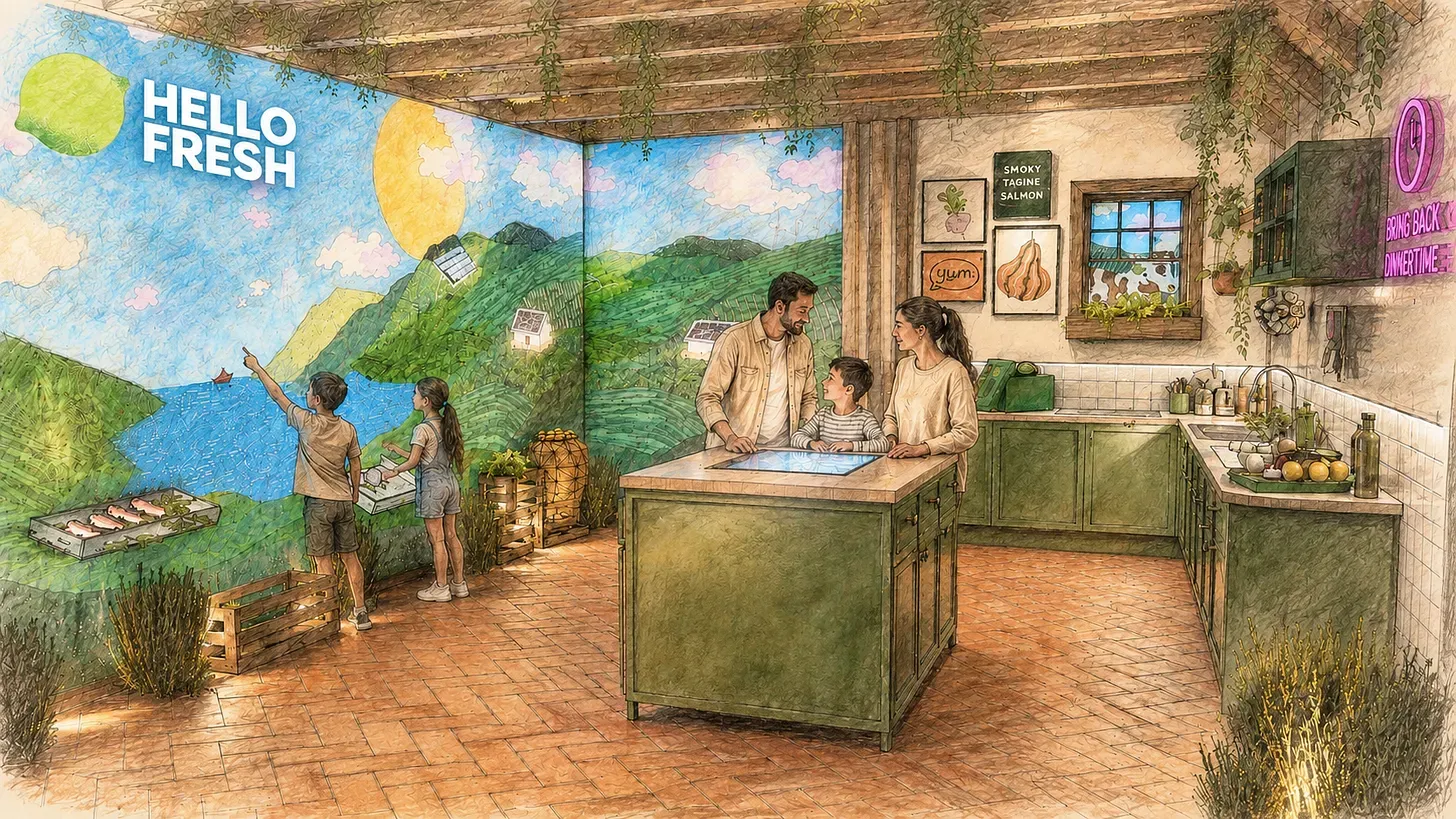
HelloFresh offers a useful example because it is, by design, a business that removes the need to go shopping for dinner. Yet this summer the meal-kit company has created a physical experience in one of Britain’s most visited cultural institutions.
The Curious Kitchen at London’s Natural History Museum, running from 27 July to 30 August 2026 (pictured above), invites families to harvest ingredients in a digital farm environment and then gather around an interactive table to assemble a virtual recipe. It is free with museum entry and forms part of HelloFresh’s ‘Bring Back Dinnertime’ campaign.
This is cleverer than a branded pop-up in a shopping centre. HelloFresh is borrowing the museum’s context: family discovery, science, the natural world and time together in the school holidays. The company is not asking visitors to admire a meal-kit subscription, it is inserting itself into a bigger cultural conversation about where food comes from and what happens around the dinner table.
It also catches a wider appetite for farm-to-fork stories. The success of TV shows such as Clarkson’s Farm has made food production entertaining, personal and occasionally dramatic. HelloFresh turns that interest into participation. An online service becomes tangible, ingredients become a story and the brand becomes associated with a family memory rather than a cardboard box on a doorstep.
This is the first rule of modern place: a brand does not always need to own the venue, it needs to understand why people are there.
When a screen brand becomes a destination
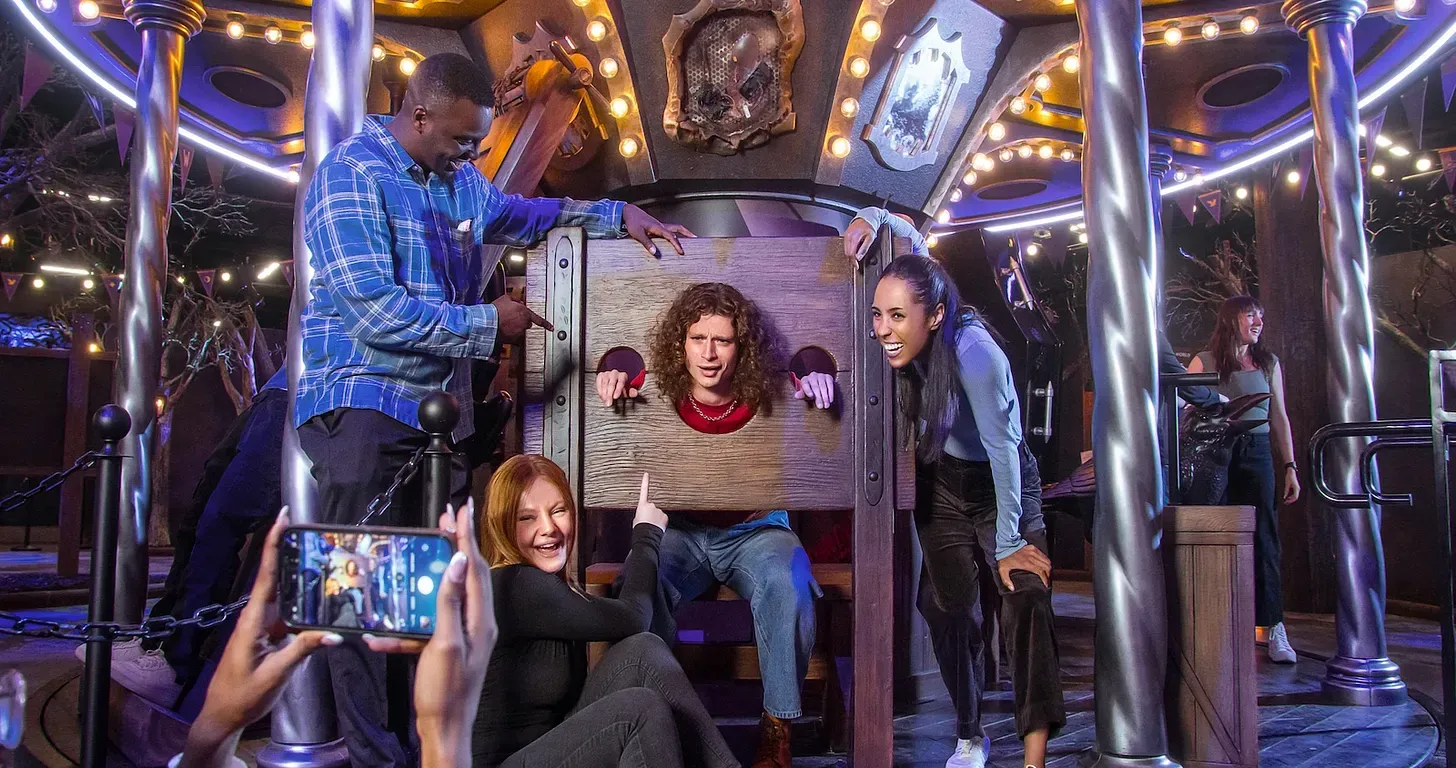
Netflix has taken the same logic much further (pictured above). Its first two permanent Netflix House venues, in Dallas and near Philadelphia, turn intellectual property made for the screen into somewhere to play, eat and shop. Each occupies more than 100,000 square feet, and includes rotating experiences based on programmes such as Squid Game, Stranger Things, Wednesday and One Piece, alongside mini-golf, VR, food and merchandise.
Netflix no longer has to wait for a customer to choose its app from a TV menu, it can become the reason for a day out. A streaming subscription becomes fandom, fandom becomes hospitality, games, retail and social content.
Netflix is behaving partly like a theme-park operator, partly like a restaurateur and partly like a retailer. The malls gain a destination capable of replacing the traffic once generated by a department store. The customer does not care which sector owns which part. They experience one occasion.
This is CustomerX in physical form. Growth comes not only from taking a larger share of streaming spend, but from taking a legitimate share of leisure, food, merchandise and family time.
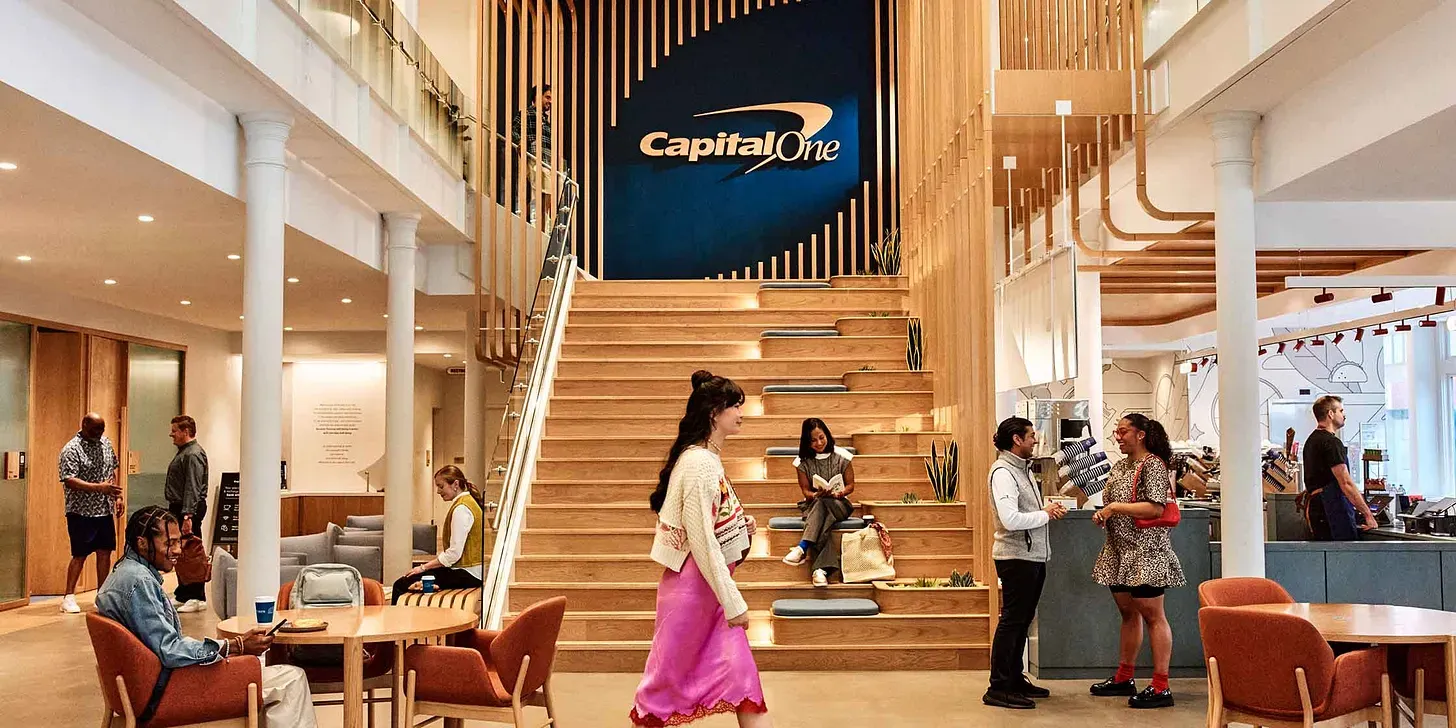
Banks have been making a quieter version of the same move. Capital One Cafés (pictured above) are part coffee shop, part workspace and part financial-service location. They welcome non-customers as well as customers, provide self-service banking and access to “Ambassadors”, but avoid the atmosphere of a conventional branch.
The coffee is not incidental, it changes the emotional meaning of the place. People do not generally choose to linger in a bank branch, but they will linger in a café. By combining the two, Capital One gets to be present when a customer has time, not merely when they have a problem. It turns the bank from somewhere one must visit into somewhere one might choose to be.
The store as stage, studio and medium
Retailers also need to reconsider the places they already own. The supermarket is full of customers, but it is also full of packaging, promotions, screens, Tannoy messages and competing jobs to be done. However, footfall is not the same as attention.
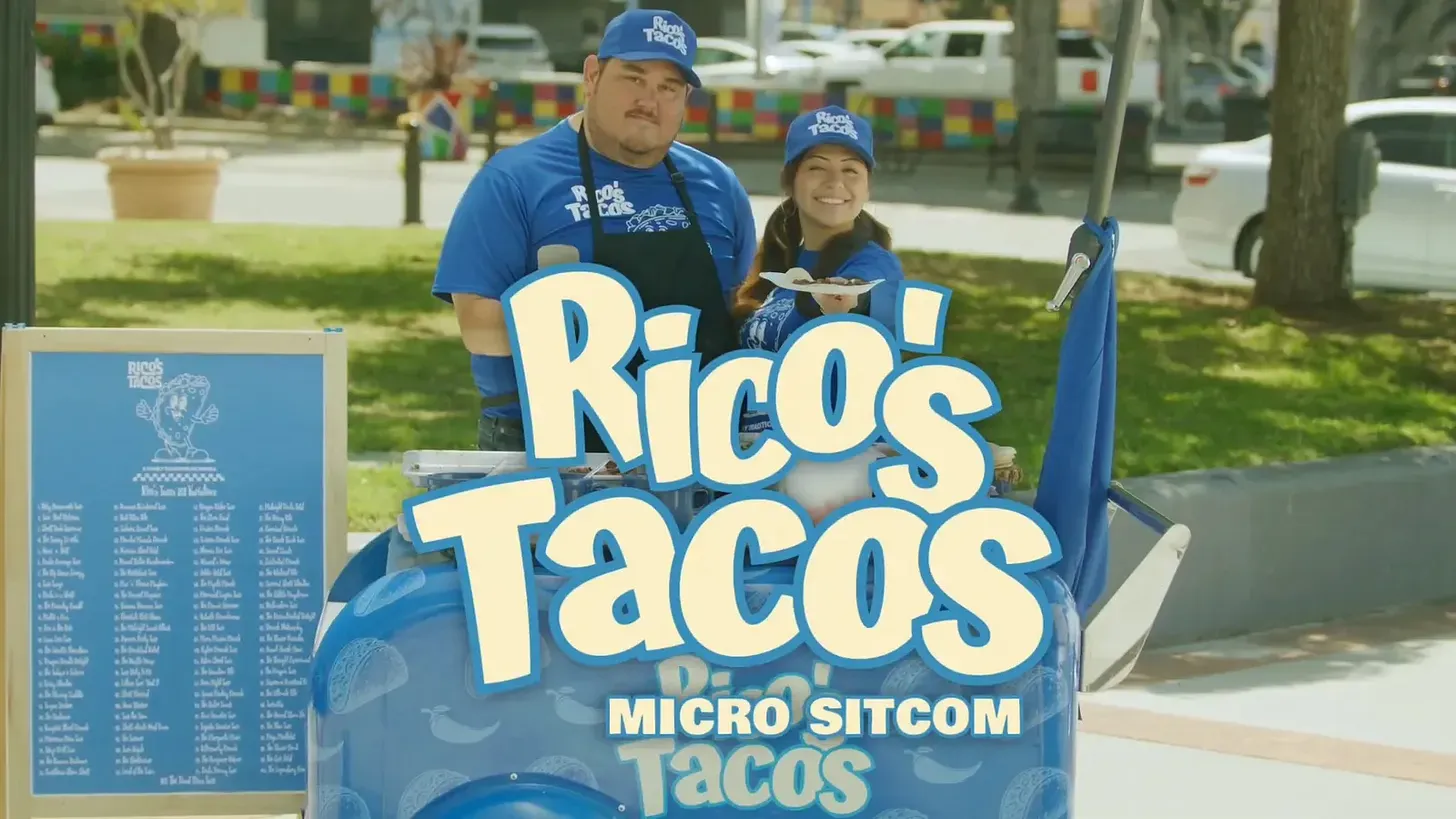
Albertsons in the US is testing an unusually literal response: making entertainment in and around the store. In June 2026, Albertsons Media Collective and Procter & Gamble launched Rico’s Tacos, a 22-part microdrama following a multigenerational Californian family building a taco business (pictured above).
It was filmed at Albertsons locations, features real store employees and runs across social media, the retailer’s app and in-store screens. Short teasers in store use QR codes to carry shoppers into the longer story.
This revives the logic of the soap opera – the entertainment format originally financed to sell household goods, like soap – but gives the retailer a new role. Albertsons is not merely selling P&G some screen impressions after the creative has been made, but gaining shopper insight, store locations, products and distribution shape the entertainment from the outset.
As P&G’s Lela Coffey put it, the brands most likely to win are those that connect in “relevant, everyday moments”. That last word is critical. The content has to suit a customer waiting at the deli counter or moving between aisles. A television episode dumped onto a supermarket screen would be an interruption. A short story designed around the rhythms of the place may feel like part of it.
Paul Brenner of Instore Marketplace describes the same opportunity as creating “live moments”: a celebrity appearance in a store, supported by out-of-home media nearby and in-store radio before and during the event. None of those elements is especially novel alone. Connected in time and place, however, they turn an ordinary visit into an occasion and give both the store and the surrounding media a shared purpose.
That is also where digital signage can become more than animated wallpaper. Pierre Gillet, vice-president of international sales at BrightSign, argues that networked screens can respond to time, weather, season and shopper behaviour; direct people around a store; show queue times; offer recipes; and connect promotions to loyalty programmes. Strawberries and cream during Wimbledon makes sense because the message belongs to the moment.
The danger is obvious. Once every surface becomes media, the store can become a website with shelves: cluttered, noisy and optimised for the advertiser rather than the person trying to buy milk. Relevance is not measured by how many screens can carry a campaign, but by whether the content improves, entertains or simplifies the visit.
Sometimes absurdity is the point
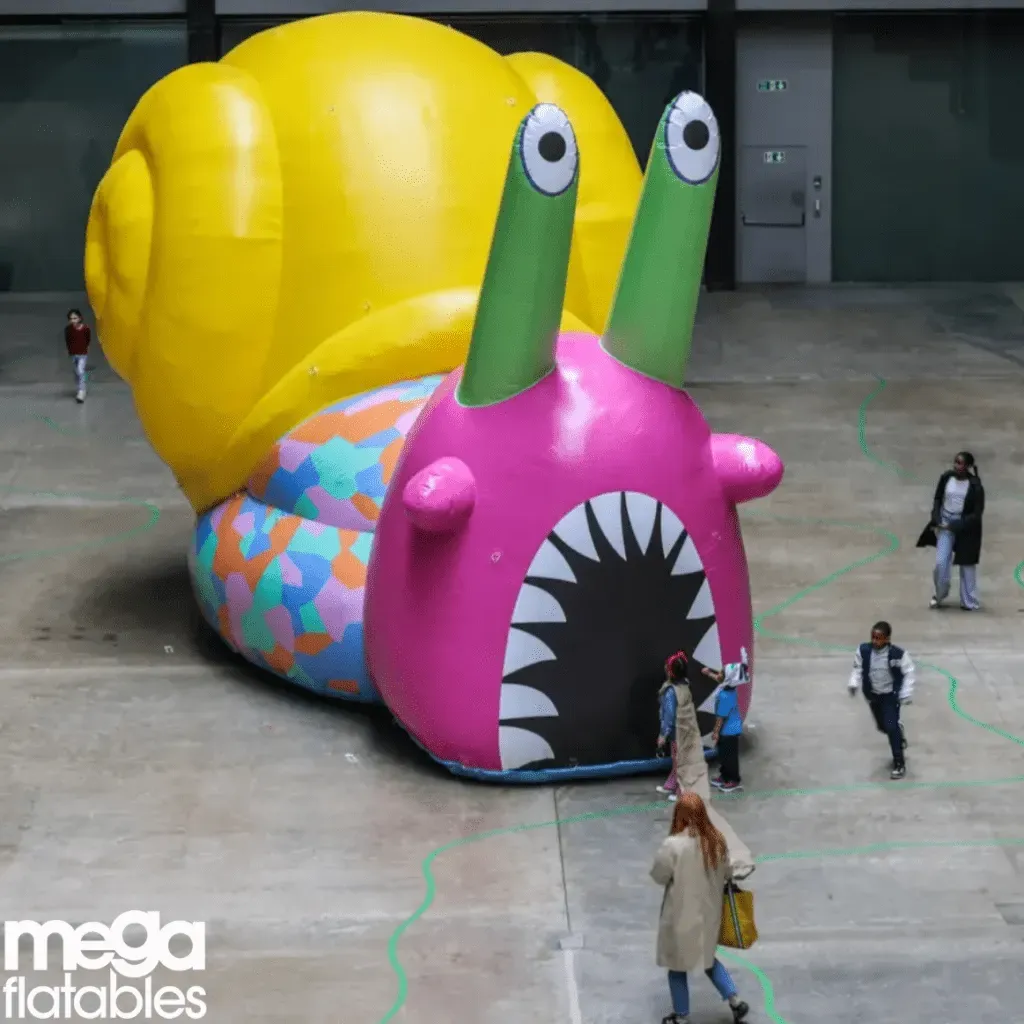
There is, finally, a case for the giant inflatable. An enormous snail in a shopping centre (pictured above) or a 10-metre replica bottle at an event may sound like marketing’s least sophisticated technology. Yet in a visually crowded environment, its absurdity is the mechanism. Research on visual salience shows that physically distinctive objects can attract faster attention, while work on the Von Restorff or isolation effect helps explain why an item that differs from its surroundings can enjoy a memory advantage.
John Spence, managing director of Megaflatables, makes the commercial version of the argument: scale wins the first glance, but creativity and relevance determine whether that attention becomes a memory.
That caveat matters. Novelty is not a magic trick; research shows it can help or hinder memory depending on context. An enormous object with no relationship to the brand, place or moment is merely large. The best physical interventions do more than interrupt. They give people something worth pointing at, photographing or talking about.
Do not occupy space, add something to it
The lesson for brands is not that every supermarket needs a drama, every bank needs a barista or every streamer needs 100,000 square feet of mall. It is that physical place must now earn its role.
That starts with the customer’s reason for being there:
-
A family at the Natural History Museum is receptive to discovery
-
A fan at Netflix House wants to enter a story
-
A supermarket shopper may welcome entertainment while waiting, but not when it blocks a quick trip
-
A person in a café may be open to a financial conversation precisely because they have not been marched into an office to have one.
Brands also need to design the loop between the physical and the digital. Social may create the first visit; the visit should create something worth sharing; that sharing should make the next person curious. Data can help coordinate the experience, but it cannot substitute for one. And measurement needs to extend beyond immediate sales to dwell time, return visits, participation, advocacy and the additional spend created around the destination.
Most of all, brands need restraint. The real world is crowded because everybody wants a piece of it. Winning does not necessarily mean being louder. It means becoming the one thing in the environment that feels useful, timely, surprising or human.
Place never went away, it simply stopped belonging automatically to whoever paid the rent.