)
)
)
The 'health hub economy' - where effort becomes identity, community and commerce...
In a recent post, I talked about the “compressed economy” of airports, where luxury, travel, retail, restaurants, lounges, wellness and financial services blend into one context without breaking a sweat.
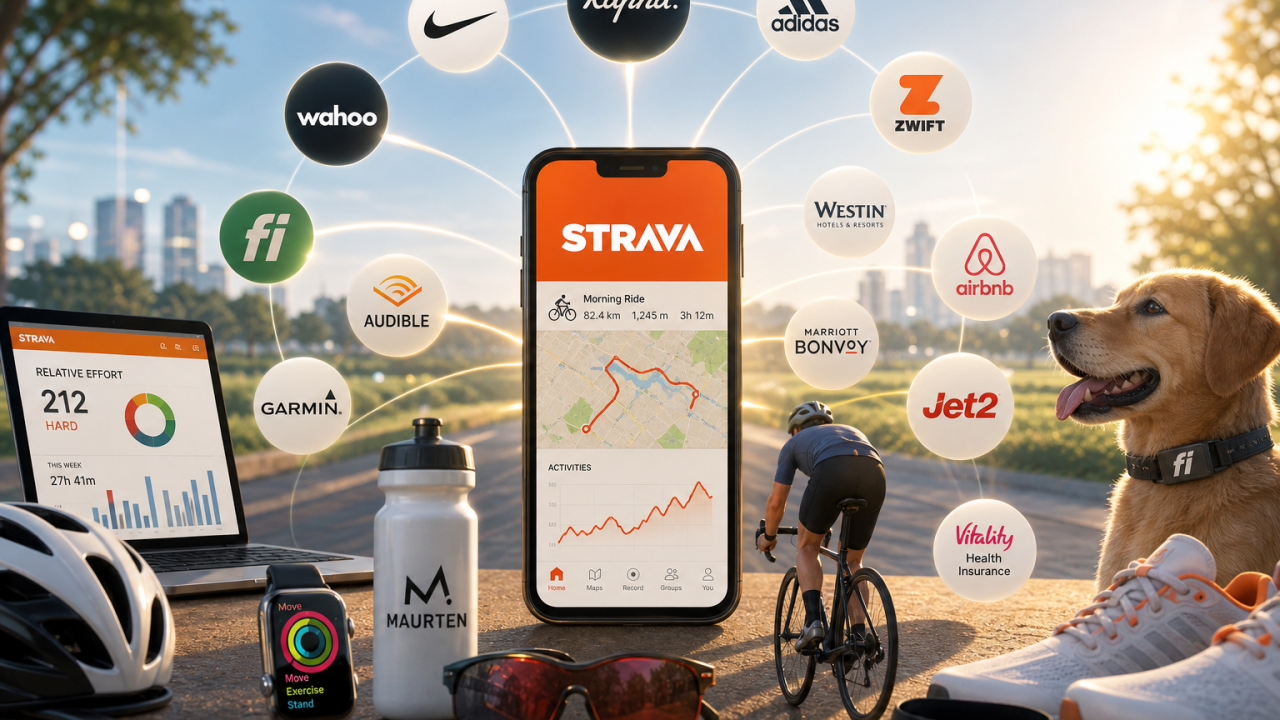
Next up is the health and sports-data world, where an app like Strava has become a key player in how customers exercise, play, date, get healthcare, buy insurance, get retail therapy, game and even betray troop locations to enemy scrutiny.
The “health hub” is another customer context that illustrates the post-sector, channel-blind world we are exploring at CustomerX .
StravaIf it’s not on Strava, did it really happen?
Strava — https://www.strava.com — is the app that takes your exercise data, from GPS tracking to heart rate and sport-specific measurements such as cadence and power output, then publishes, tracks and analyses your exercise. It adds a friendship and social graph, and supports data exchange, rewards and commerce.
It’s where effort becomes identity.Initially, recording bike rides — from sensor to Garmin by GIS account and then uploading to Strava; pain! — elicited no more than an eye-roll from my wife. Now, with its web of technical, commercial and social connections, Strava gives us a central player in “activity-as-cross-sector-customer-context”. So let’s look at the connections from here.
Strava’s expansion vectors as a platform for gamefication, social and commerce
Vector 1: Gamification — roads as racecourses
Firstly, Strava gamifies the road.
In road cycling, “King of the Mountain” refers to the best climber in a major race such as the Tour de France. Climbs are classified by length, incline and severity, from Category 4 — the closest these athletes get to “easy” — to Hors Category, or “beyond categorisation”. Think of a vertical brick wall lasting 30km. The winner wears the coveted polka dot jersey.
Strava takes that terminology and applies it to any road or “segment”. Whoever is fastest along that stretch gets “KOM” against their time, shown on a leaderboard for that segment.
Public infrastructure becomes a competitive layer.
There is also humour and fun to be had in the clever creation and naming of segments.
Completionist drive
Building from this concept — repeating the same segment for the highest speed — is its total opposite: Wandrer.earth, https://wandrer.earth. Wandrer takes data from Strava, which in turn may have reached it from Garmin or other tracking sources, and gives you points for each new, fresh kilometre you cover. Its creator Craig Durkin coded this as a way to encourage exploration, and it is now part of my life: seeking “fresh Ks” wherever I travel. The same mechanism, different approach, complementary fun. It adds "completionist logic" to the game.
[A sports]man’s best friend 🐕
Strava also supports your pet’s activities. Really.
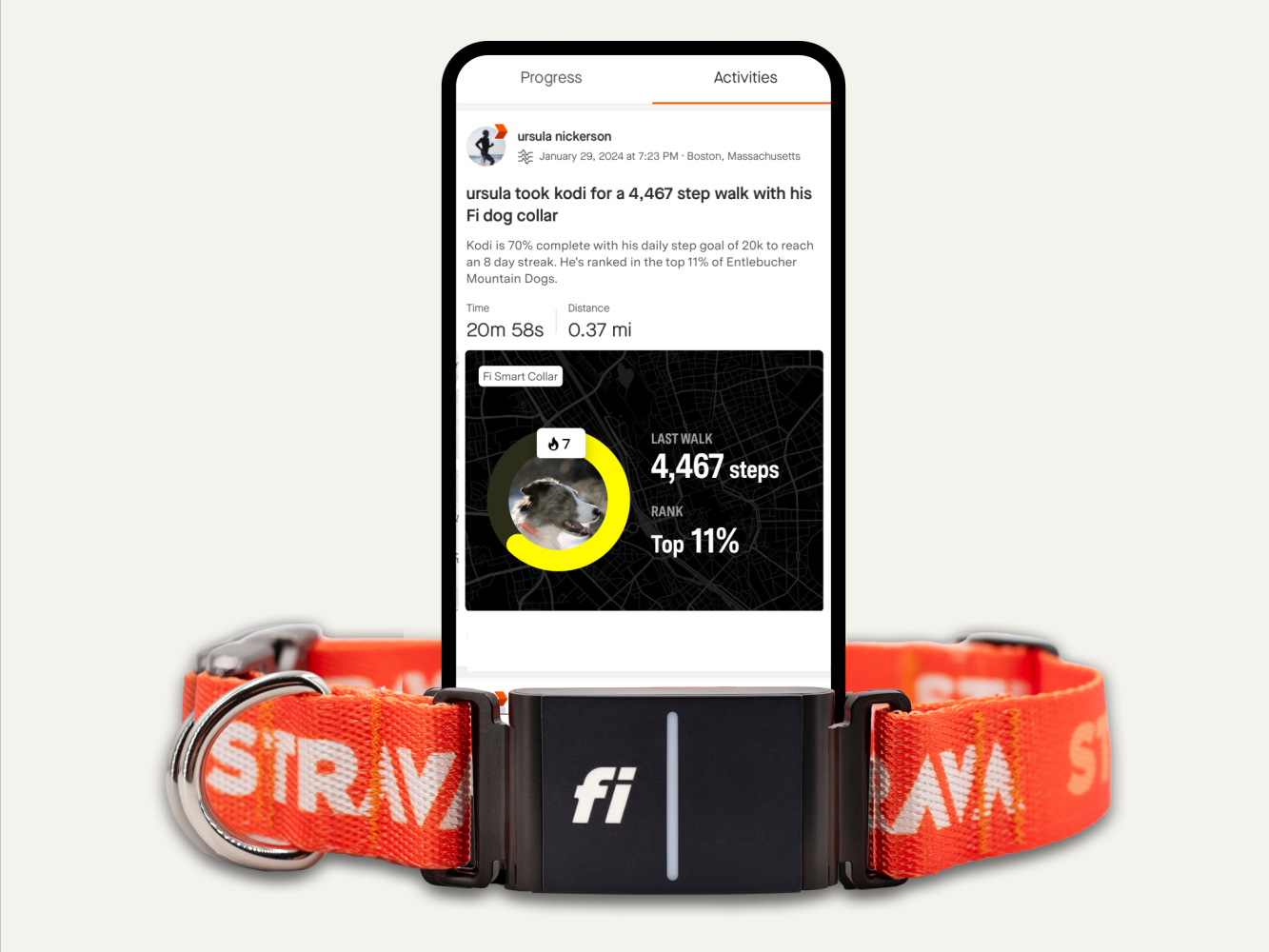
Fi — https://fitracking.com — is a connected collar for your dog that measures its activity. Strava now allows you to upload your pet’s paces alongside your own.
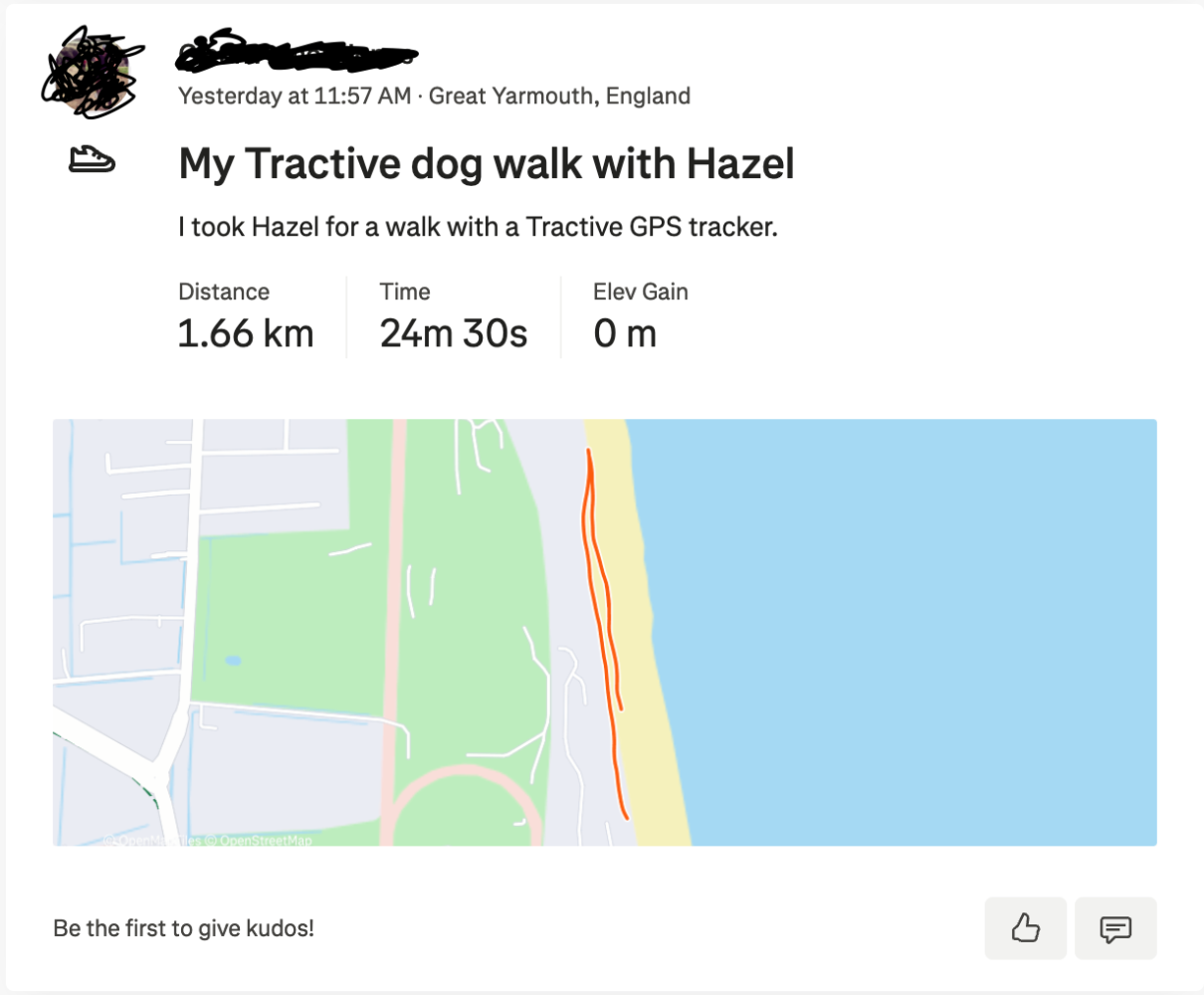
Now, dogs have leaderboards by breed, visible in the Fi app, but this growth of tracking has riled purists who feel their sports-first app is being diluted and distracted by poochy capers, yoga sessions and volleyball activities. You can see some of the grumpy comments in Strava’s own community thread. IMO, this is part of the move towards a generic platform rather than a niche community tool. Provided there are filters, I’m happy to see other activities by my friends and Strava buddies.
When the collar gets a KOM, you know the system has transcended its initial purpose.
Brands and retailers join the game
Sports brands show affinity, genuine community connection and commercial links via Strava, crossing sectors into retail.
First off, props to the OG cycling brands like Rapha and Le Col . Rapha’s Club — https://content.rapha.cc — brings stores, or rather “clubhouses” with cafés, together with rides from the stores, organised group rides and self-identifying rides.
Remember, Rapha is the brand that offers you a discount on replacement kit bought due to weight loss from cycling, or damage from taking a spill off your bike. Proper commitment. I dream of needing to size down.
Rapha organises “Festive 500s”, where riders record 500km-plus over the Christmas break, while Le Col routinely offers product discounts and rewards for completing activities.
Nike Run Club, adidas Running and many others support, celebrate and promote activity. This extends to running tips, gear advice — of course — and athlete stories.
Strava is the place both to fish for new customers and to “show up and be with your customer” as they sweat, pound, strive and achieve.
Strava, in turn, has a neat capability to record what you are using on a given bout of exercise. I note which bike I was using, the shoes and other bits of kit.
This is both fun — I know, I’m sad — and interesting. It is also a buy signal: “you’ve worn these trainers for 4,000km; time to get a new pair”.
For brands, this information is a goldmine. It also allows you to spend time with your best customers when they are not in your store.
The relationship used to start and end at the till. Now it runs with them.
Vector 2: Crossing sectors — follow the behaviour
Beyond the obvious kit companies and sports-focused commercial activity, we are seeing cross-category tie-ups.
Audible x Strava
If you join the Audible challenge — 6hr 5m of activity, cunningly the average audiobook length, it seems — you get two months of Audible free.
Great. I’m already an Audible subscriber, so I get zero benefit. I still signed up. Why? No idea.
The programme had a re-up in February 2026 and now offers free Strava Premium via the Move with Audible challenge. Again, I signed up. Again, I won nothing since I’m already a Strava Premium member. Honestly.
What is interesting about the tie-up is that Audible’s own research showed that 80% of Australian runners find audiobooks beneficial during runs. “People who listen” also exercise 25% more often and for 35% longer, according to Mediaweek. So the tie-up makes sense.
Not all listening is the spoken word. Spotify integrated directly into Strava’s activity-recording screen back in 2023, so users can play, pause and skip without leaving the Strava app.
All we need now is for the playlist BPM to be controllable by the crown on the Apple Watch, and we’ll be laughing. Apple, call me 🤙
The cross-sector behaviour is only curious until you realise that it is following the customer’s behaviour.
Audible and Strava seemed odd until you remembered that runners have two free hands and two open ears.
Westin Hotels and Airbnb x Strava
More than 240 Westin Hotels & Resorts properties globally have curated running routes starting from the hotel front door, as part of the WestinWORKOUT programme. You can also earn Marriott Bonvoy points for completing the RunWESTIN Challenge. Airbnb has also joined in with running advice near properties, under the marketing slogan of going on a “run-cation”. Strava data shows that people run 14% further and hike 32% more when staying in hotels. Yet again, the tie-up follows the behaviour.
Jet2 x Strava
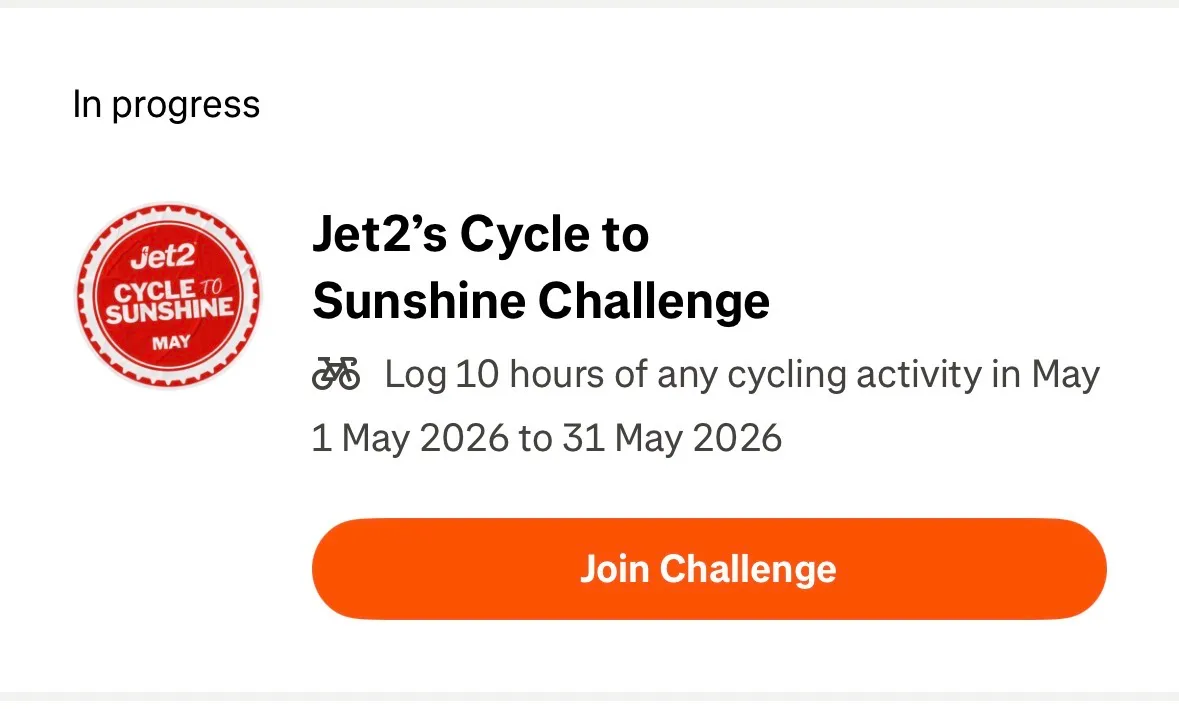
“Cycle to Sunshine.” OK, thank you. This appeared in my Strava feed recently. I’m ticking off the hotels; now the airlines.
Hardware providers join the ecosystem
I have mentioned the clothing and footwear brands above, but cycling and other sports have a large element of electronics and metalwork. In cycling, we have computerised GPS navigation, linked to heart rate and cadence, while the “gubbins” on your bike — pedals, gears, chainsets, levers, the groupset — are chunky one-off purchases that vendors wish you would upgrade.
Enter the hardware manufacturers.
SRAM makes groupsets, as a major competitor to Shimano and Campagnolo . Some years ago, it acquired independent cycling computer company Hammerhead , maker of the Karoo 2 computer.
So a chain-and-gears company acquired a screen and software business.
If you are remotely interested, the wonderful DC Rainmaker has a lengthy analysis here: https://www.dcrainmaker.com. One for the committed. It is a deep but enlightening rabbit hole. 🐰🕳️
Wahoo Fitness , creators of the tricked-out indoor bike trainers, created SYSTM, its training software package, to move beyond hardware.
Vector 3: Third space and dating
Let’s move beyond Strava for a moment and into the wider world of health and wellness.In this world, where actual exercise and activity take place, we see changes in the customer’s context too.
Last century, a gym’s smell — baked hormones and socks — would hit you before you had even checked in, and the aesthetic was Rocky on a bad day. Skip forward to today and we see city-centre gyms adopt the aesthetic of a luxury spa, with high-tech machines, wellness offerings and juice, kombucha and laser treatments all round.
They are clubs more than gyms.
In 2024, The Gym Group surveyed 2,000 UK 18- to 24-year-olds and found that 37% of Gen Z viewed working out as a way to socialise, rising to 44% in 2025; 42% had formed new friendships while keeping fit, rising to 51% by 2025.
The average monthly spend on fitness in the survey was £48.81 — more than streaming, eating out and fashion.
Anecdotally, Gen Z finds the gym a better place to meet prospective partners as disillusionment with dating apps rises.
Gen Z explicitly call their gyms a “third space”, and I will do a piece solely on this in the future, but the echoes with airport experiences and compressed commerce are clear.
Dwell time is inventory in the third space, and Strava is a data layer.
Vector 4: Medical data and insurance
So far, we have covered commercially obvious connections: retailers and D2C businesses following their customers. However, Strava is also part of a vertical, “internal” market of medical data.
Apple Health is an ecosystem of sensors, apps and data, all linked to one’s Apple ID.
Apple Health’s “Share with Provider” capability, introduced with iOS 15, allows health data such as wearable data, ECG readings, sleep data and clinical records to be shared with participating healthcare providers. Strava links into this. It tells Apple what my exercise was, while Apple tells it my sleep, weight and so on.
Then my Withings digital scales measure my water content, bone density, lean mass, fat, visceral fat and — I think — my weight.Via Apple Health, it knows my steps, and Strava also sees the data.
Ecosystem. Everything’s connected.
Before typing this, I scrolled through the settings of Apple Health — https://www.apple.com/ios/health — and saw mental health records, ECG, AFib history, health assessments, menstrual cycles and more, all available to share with a health professional at the click of a button. For my last medical, when I was asked about my exercise, general health and weight, I simply got the report from my phone. I think my heart skipped with joy as I shared it. Must check the records.
This connectivity affects the electronics and medical products sectors too. No self-respecting device wants to be unconnected. The value is in the aggregate.
Wearables
Beyond the strapped-on Apple Watch or Oura ring, wearables extend the universe of connected body data. Diabetics know the value of body-attached continuous glucose monitors, and we are seeing other things attached to our bodies that undertake monitoring. From the recently announced perimenopause tracker Peri — https://www.myperi.co — to new generations of smart glasses that, in addition to tracking people back to their LinkedIn photos, allegedly, monitor eye movements to detect brain anomalies. The research team at EssilorLuxottica is looking to bring monitoring to smart glasses, handy since the group owns both Ray-Ban and Oakley, and has active partnerships with Meta. More here: https://www.essilorluxottica.com
Insurance
With all of this data, it is no surprise that health insurance companies are interested. Direct data access enables innovations in business models.
Vitality , owned by South Africa-based Discovery and formerly marketed as PruProtect, offers a discount for “healthy behaviour”. Recent online ads are offering new policyholders a free Apple Watch — all the better to track you, my dear. The actuarial reasons are obvious, and a great boon to the healthy and wealthy. For the economically less well-heeled, it is a gulf in provision that is set to widen.
Insurers don’t care what sport you do. They just care that you keep doing it — and that they can see you doing it.
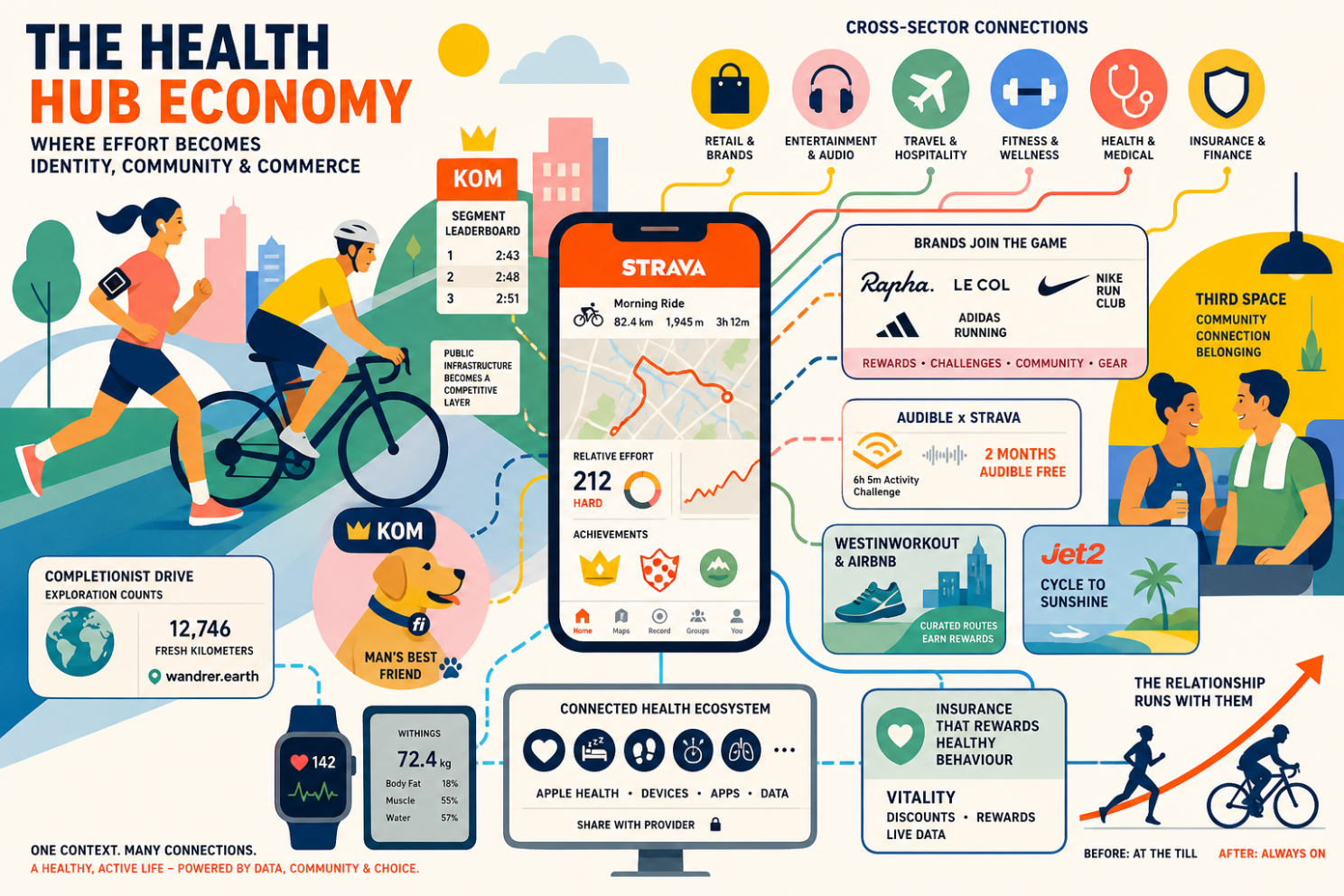
New customer contexts
We started with Strava — other apps are available — as a modern hub for exercise data and communities of interest. Then retail and entertainment joined the party. Hardware, both electronic and sporting, got involved. Then travel links, leisure spaces, third spaces, medical data and insurance followed. Let’s not forget our dogs .
Together we see a new customer context: a set of situations, places, mental availability and influences that are beyond one sector, one brand or one modality.
This is not a “fitness” story. It is a customer-context story. Unlike the airport, where we have compressed commerce over a couple of hours, this context can run your whole healthy and active life.
At CustomerX, we will be looking at this context, and how sector leaders can copy, collaborate or compete to extract as much as possible of the customer’s disposable income and discretionary spend.
Endmatter- The full version of this post is on my Substack, with more detailed references and footnotes - https://www.ianjindal.com/p/the-health-hub-economy-where-effort
- CustomerX takes place at Olympia London on 14–15 October 2026: https://www.customerx.net
- I’m looking for speakers, case studies and change-making idea-generators, so do get in touch ☎️
- In future newsletters, I’ll pick up on other contexts. In the meantime, please share your thoughts — and especially any further connections I may have missed or skipped over.
- The previous customer context with the airport (https://www.ianjindal.com/p/thecompressed-economy-what-airports) and I wrote about the role of AI as a Solvent and Accelerant on the route to a CustomerX world.